What to do when your roof is leaking
Water coming through the ceiling is stressful, and it is easy to do something daft in a hurry. Here is what actually helps, in the order it matters.
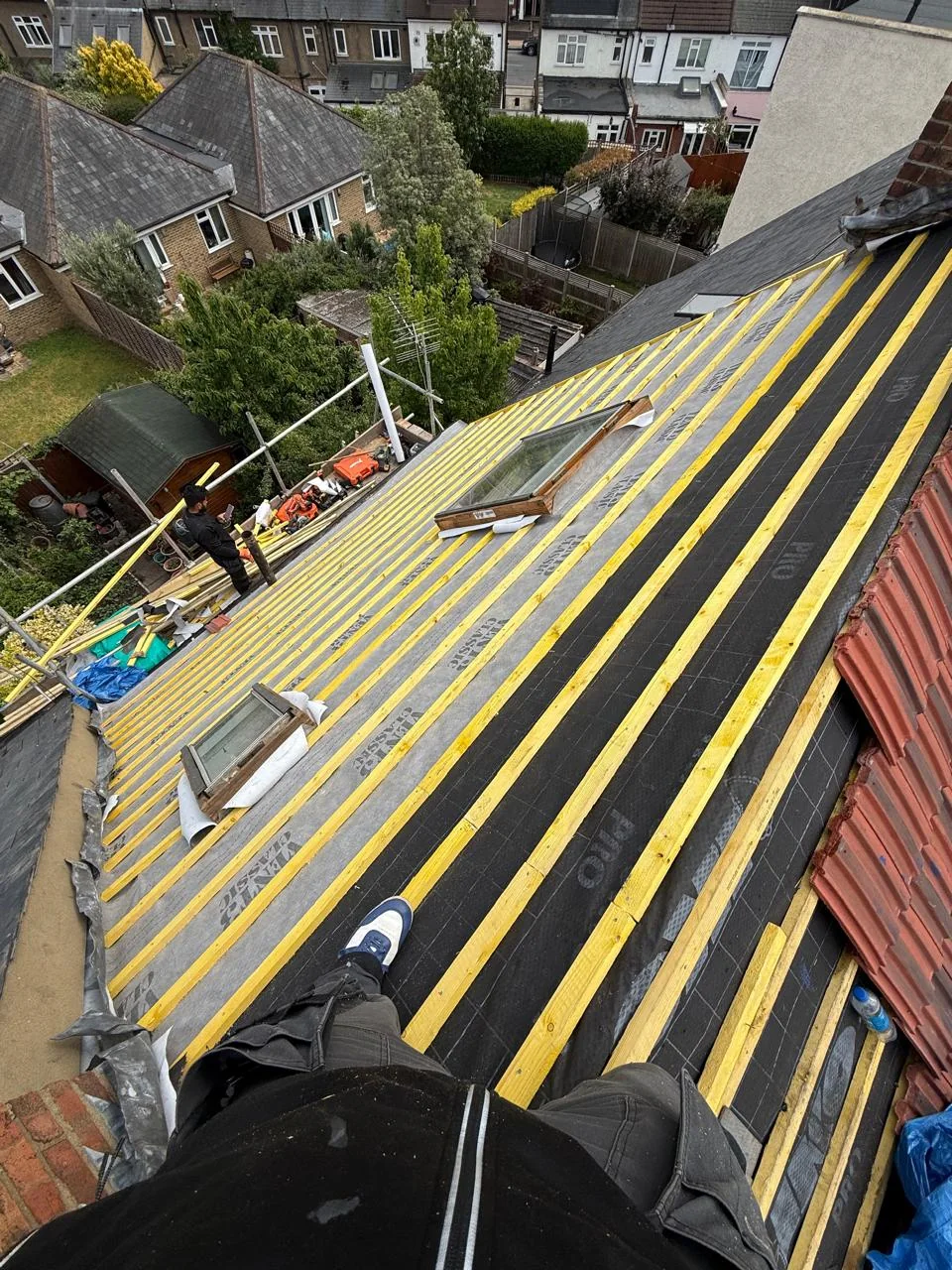
Most people start looking for an emergency roofer in the middle of a storm, which is exactly when it is easiest to make a bad call. Speed matters. Climbing onto a wet roof in the dark does not help anyone.
First, get everyone safe
If the ceiling is bulging, cracking or dripping heavily, get people and pets out of the room. A saturated plasterboard ceiling can come down without much warning.
Water near lights, sockets or wiring is the real danger. Do not touch wet fittings and do not stand in water to flick switches. If you are worried, turn the power off at the consumer unit if you can reach it safely and dry, and call an electrician. If anyone is in immediate danger, ring 999.
Stay out of the loft if it is dark, the boards are wet or there is water near wiring.
Limit the damage, if it is safe to
From a dry floor, move what you can out of the way and put a bucket under the drip. Towels and a dust sheet on the floor help. Do not poke holes in the ceiling or pull anything down to "let the water out" unless someone qualified has told you to.
If the room cannot be made safe, shut the door and leave it. Carpets and furniture can be replaced.
Take photos and a few notes
This helps whoever you call, and it helps with any insurance claim. From somewhere safe, write down:
- Your postcode and which room or bit of the roof
- When it started and whether it is getting worse
- Whether it happens in driving rain, long spells of rain, or when the gutter overflows
- Where the stain or drip is inside, and any damp in the loft
- Anything you can see from the ground: a slipped tile, lifted lead, a gutter pouring over
- Any past repairs on the same spot
Remember the drip is often not under the hole. Water can run along a rafter or the felt for a metre or two before it finds a way down.
Ring a roofer and be straight about how bad it is
Tell them whether water is coming in right now, whether it is near anything electrical, and whether you can still live in the room. Ask whether the first visit will be a look, a temporary make-safe, or the proper repair.
We take leak call-outs across the areas we cover. We do not claim to be a 24-hour service, and how soon we can come depends on the weather and where you are. Ring 07584 213 770 and we will tell you honestly.
What the fix involves
The roofer should be looking for where the water gets in, not just where it comes out. That might be tiles or slates, lead flashings, a valley, the ridge, a roof window, the joint where a flat roof meets a wall, or a blocked gutter.
If the weather is too bad for a proper repair, a temporary patch or tarp is fine, as long as you know what it is for, how long it should last and what the proper repair will be. Get the price for that in writing before it goes ahead.
Do not go up there yourself
Falls from roofs and ladders injure a lot of people every year. The Health and Safety Executive is clear that roof work needs planning, the right kit and people who know what they are doing, and that nobody should be on a roof in rain, ice, frost or high wind. Their work at height guidance and fragile roof guidance spell it out.
Do not lean a ladder on the gutter, walk on tiles, or trust a skylight or flat roof to take your weight. What you can see from the garden is enough for the first phone call.
Roof leaking now?
Ring us with your postcode and what is happening. Once things are calmer, send photos through the quote form.